 Who will lead the mobile commerce charge? Mobile_Commerce_Guide_2013
Engage Customers and Build Loyalty in Developed and Emerging Markets
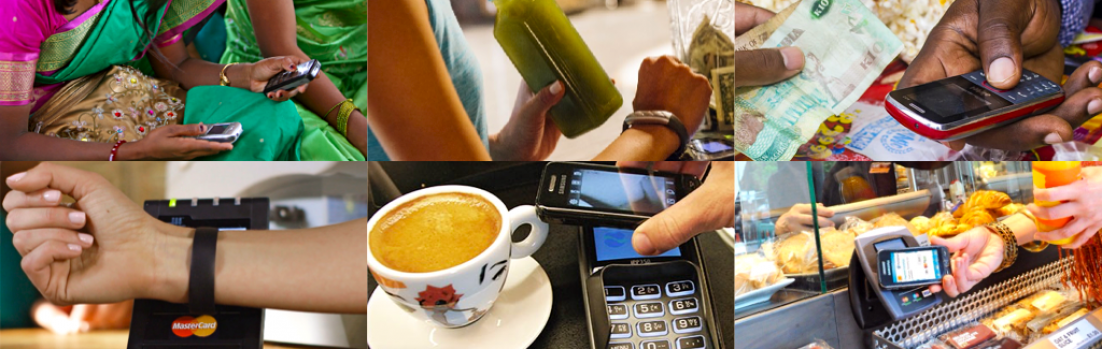
The advance of mobile technologies, a surge of innovation in emerging markets and increased consumer requirements for enhanced retail experiences present opportunities for banks to expand into new service areas and extend their existing services to the unbanked. But banks are not the only ones taking note. Mobile operators, card issuers, app developers, and retail chains are also jockeying to establish competitive offers and grow their footprints.
With nearly 6 billion connections and counting, worldwide mobile penetration has already been remarkable. But mobility is not only enabling rich and always-on interactions. It is also transforming banking and commerce, creating a new mobile marketplace that is always accessible and always ready for business. The movement toward this new phase of mobility — which Accenture calls Mobile Life — is pushing mobile money offers in three distinct directions: traditional mobile banking services (mBanking Services), mobile payment services (mPayment Services), and mobile enabled consumer services (mEnabled Consumer Services). Often the initial point of entry for banks into the mobility arena, mBanking links customers’ bank accounts to their mobile devices and provides customers with a new way to manage their finances. Services can range from basic product information and Most banks are in the business of making money — and they have a huge learning curve to travel before they can serve the poorest of the poor. transaction histories, to more advanced operations such as loan applications and inter-bank fund transfers. Mobile money transfers and purchases, or mPayments, open the door to previously unbanked markets. These types of services can vary significantly in their sophistication, from SMS-based money transfers, to Near Field Communication (NFC) payments, to a full “digital wallet” capable of storing multiple credit cards, prepaid cards, and discount cards for mobile transactions and commerce. Least understood and not yet widely adopted, mEnabled Consumer Services encompass a broad range of mobility offerings catering to specific consumer lifestyle needs within and outside the traditional banking realm. Services can range from simple SMS-based promotion alerts to location-based targeted market-ing. With mEnabled Consumer Services, banks have the opportunity to venture into new businesses and further embed their brand in consumers’ daily lives. Banks may choose to extend existing offerings to new customers, branch out into new value segments or increase the sophistication of their services in a particular area. However, banks should be aware that they are not the only ones with this ambition. While the banking industry has dominated banking and payment services for many years, the recent advance of mobile technologies and emergence of new consumer behaviors has leveled the playing field. As a result, new entrants, new partnerships and new operating models are flooding the space and transforming the competitive landscape. Asia’s affluent Thus, many banks find themselves in an unfamiliar position, struggling to keep up — or join up — with mobile operators, card issuers, app developers, and retail chains that are also jockeying for position in a value chain that spans activities from banking to commerce to CRM.
Competition is stiff, particularly in Asia Pacific where a digital wave is creating a market hungry for mobile money services. Driven by the advance of a tech-savvy consumer base and a ‘change of the guard’ that sees Generation X making way for Generation Y to take the helm, this shift is happening much faster in Asia Pacific than in Europe or North America. Indeed, the youth segment in Asia Pacific is not only far greater in sheer numbers; it also has a much greater desire to lead a Mobile Life. This segment, which I describe as digital natives’, has a huge appetite for mobile/digital services. In fact, demand in the region far outstrips supply of both services and bandwidth. Notably, the rapid growth of the middle class across Asia Pacific presents players with additional opportunities. Another 70 million households are expected to join this burgeoning class by 2015, and this impressive income growth extends all the way up the social ladder. Between 2010 and 2015, the number of millionaires in the Asia Pacific region is forecast to increase by 25 percent (compared to 17 percent world-wide), while the ’ultra wealthy’ segment will swell by 37 percent (nearly double the global rate). The region is not only growing richer; it is also becoming more passionate about mobile technologies and services. The outcome will be an increase in smart-phone penetration, a trend we already observe, that will drive more mobile app downloads and usage of the mobile Internet. Significantly, NFC will likely gain serious traction, with an estimated 450 million NFC-capable devices expected to hit the market over the next three years. As more people embrace a Mobile Life, the demand for services — including banking, payments and commerce — will skyrocket. In fact, Accenture research found that 60 percent of mass affluent customers, which includes the region’s upper middle class and high-net-worth individuals, are interested in using digital channels in conjunction with bank branch visits. In addition, 21 percent of respondents would prefer to switch completely to direct banking. Four mobility value segments for banks Mobile as a platform to improve bank’s operational efficiency Enterprise focus Customer focus Mobility transformed banking processes m-salesforce m-Salary m-Allowances m-Claims mEnabled enterprise mBanking services mPayment services Mobile as a new interactive channel to increase customer loyalty and cross-sell opportunites mEnabled consumer services Mobile as a conduit to build brand presence and integration into consumer’s daily lives Mobile as a payment tool to target unbanked sections of society and expand mCommerce opportunities Mobile wallet (Stored value account) mCommerce Augmented reality, for e.g. real-time property guide Mobile Life White space represents the untapped opportunities as a result of new business and/or operating models
Now that I have described the key market demographics and data points across the Asia Pacific region, let’s examine how mobile banking services have evolved across the region. Dramatic economic growth and rising household incomes across the region have created a market of mass affluent. This segment carries a mobile phone and is already well accustomed to using mobile banking services to check balances, pay bills and make P2P transactions. The next step is full mobile commerce, a space where banks and merchants have an important role to play. Together they must build on the mobile wallet, a product banks first provided to make P2P payments, and extend that functionality to enable and enhance new retail experiences. Let’s say I use my mobile wallet, provided by my bank, to do some shopping and buy some clothes at Store X, for which I also receive some loyalty points as part of the transaction. A few days later I walk into a shopping mall in a different city, where the same chain just happens to have an outlet. I don’t know this, but I do receive a push notification directly to my mobile phone that says “Hi Pradip, if you are nearby and walk into our store, we will give you a 10 percent discount on your next pair of jeans and you can use your loyalty points”. Now let’s look at this from the perspective of the store merchant. First, this is a new retail experience that only mobile can deliver. It can’t be done with any other channel because there is no other channel I have on my person at all times, even during shopping and — more importantly — no other channel can deliver location-based services coupled with deep customer insight. The beauty of this is that this channel allows the consumer to pay from a mobile wallet and not a credit card, which means the merchant does not have to pay the 2-3 percent charge to the credit card company. For the merchant it’s a win-win all around. They get their money up front and without having to pay the fee to the credit card company. What’s more, the merchant now has a deeper relationship with the consumer, one that allows them to grant loyalty points and thereby encourage a return visit or purchase. From the perspective of the bank the mobile wallet currently sits outside the core banking system. In practice I can transfer money from my account to a mobile wallet. However, clever banks are also taking advantage of the opportunity to provide me additional wallets for family members, for example. In this scenario I have the option to open up a family wallet, or perhaps separate wallets for my wife and daughter. I am still the account holder, but the bank has now gained two ‘new’ customers — my wife and daughter — and sees a two-fold increase in transactions and revenues. The additional mobile wallets allow us all to conduct commerce without cash or cards, so we are happy. The merchant also benefits for the reasons I mentioned. The result is a virtuous cycle benefitting the bank, the merchant and the ‘less cash’ consumer. But banks are not alone. 26 Mobile Commerce Guide Engage Customers and Build Loyalty in Developed and Emerging Markets 27
Adults who do not use formal financial services
Percent of total adult population that is financially unserved 136 A day in the life of a ‘less-cash’ consumer society of the future 6.30am > Top up transport card/ mobile 7.30am > 9.00am > 10.30am > 12.30pm 3.30pm > 7.00pm > 9.00pm > Pay for train ticket Gain access to office Transfer money to sister The cycle continues Incoming transaction Outgoing transaction Transfer Security transaction 28 Mobile Commerce Guide Engage Customers and Build Loyalty in Developed and Emerging Markets 29 They are confronted by new entrants and competition from companies across the merging mobility value chain. Banks must adjust to this reality, which is why Accenture has recently surveyed the Asia Pacific land-scape and developed the Accenture APAC Banking Mobility Maturity Index. While it is beyond the scope of this article to discuss the Index and the factors, such as banking access and mobile subscriptions, that have important implications on a bank’s mobile commerce and wider mobility strategy, it is important to stress that banks have a limited time to master the capabilities to deliver a full mobile commerce experience, one that allows people — especially those ‘born digital’ — to do much more with the mobile phone they already reach for on every step of the consumer journey. Nearly all of the world’s financially unserved adults live in Africa, Asia and Latin America Millions of adults East Asia South Asia Sub-Saharan Africa Latin America Central Asia and Eastern Europe Arab States.
In the view of Accenture, as the balance shifts from cash to contactless payment, banks operating in Asia Pacific have a unique but fleeting opportunity to extend their reach across the entire socio-economic spectrum and position themselves at the heart of these ‘less cash’ consumer societies and retail value chains of the future. Which value segments and audiences each bank pursues will depend on the opportunities available in their markets and their own ability to compete. Unbanked opportunities While economic growth across Asia Pacific has been dramatic, the GSMA reports1 that 2.5 billion adults, just over half of world’s adult population, are unbanked, meaning they do not use formal financial services to save or borrow. These unbanked populations have quite basic needs, which first-mover banks such as Dutch-Bangla Bank in Bangladesh are meeting with mobile banking services that include airtime top-up, cash-in, cash-out, utility payment and remittance — to name a few. In markets such as China, Indonesia, Malaysia and the Philippines, where there is a large population of migrant workers, the unbanked have a particularly strong demand for mobile banking services that allows mobile money transfers within and across national borders. Interestingly, this is also a space where mobile operators, such as Ooredoo, have a huge opportunity because their footprint allows them to facilitate remittances on a large scale. However, that is the catch. Mobile operators that want to target the unbanked will not want to do it as single operators. They will want to do it as part of a kind of ecosystem so they can benefit from sharing infrastructure and best practices. New mindset Significantly, banks have the capabilities mix — and the corporate DNA, to extend their services to the world’s unbanked. However, not all have the proper mindset for the task. The unbanked are not unbanked because they don’t work or earn money. In many cases, the unbanked lack a residential address, or fail to earn a salary that covers the fee structure offered by most banks, and discourages small deposits. However, mobile allows economy of scale, increasing reach and lowering costs and allowing banks to generate revenues by serving a large volume of low income customers. Here the expectation is that the mobile wallet will evolve to drive financial inclusion by creating a mobile marketplace where the unbanked can buy goods and services, as well as access financial products, such as insurance, that will allow them to plan a secure and stable future. Financial inclusion will also make it much easier for governments and NGOs (non-governmental organizations) in developing markets to disperse aid and so push money to the mobile wallets of the poor. There is also a knock-on benefit for NGOs — and banks that choose to grasp the opportunity — to provide microfinance. Loans and credit extended to the poor will not only help improve their lives; the wealth created will increase overall GDP and inject new dynamism into local economies. Clearly, the role of mobile in these markets is to facilitate payments. However, it has the powerful potential to transform entire econ-omies. In some regions, such as Bangladesh, it is possible to glimpse that future today. However, this progress also raises a question mark over the future role of banks in enabling commerce in unbanked markets. While many banks are no doubt defining the course of mobile commerce, acting as the ambassadors of mobile commerce, it is a herculean task that not every bank can master. Besides, many banks are not able — or willing — to offer additional services to encourage commerce at the bottom of the pyramid. They prefer to focus on serving Banks have a limited time to master the capabilities to deliver a full mobile commerce experience, one that allows people — especially those ‘born digital’ — to do much more with the mobile phone.
Certainly, the banks, with the exception of those institutions dedicated to driving financial inclusion, will likely not be among the legends in the business. Put simply, most banks are in the business of making money — and they have a huge learning curve to travel before they can serve the poorest of the poor. New entrants, challenges Driving mobile commerce requires the grit and the power to roll services out to a customer base of 100 million customers and more. It also demands that the company undertaking this is not measured by the same KPIs applied to financial institutions. Therefore, it is quite probable that large organizations — such as mobile operators, governments, NGOs or even large petro-leum companies — will have the resolve to accept this challenge and drive the transformation of commerce. And we should not rule out the potential of new entrants to stake their turf in the global mobile commerce space. Banks may have dominated with banking and payment services, but many will soon find themselves struggling to keep up. Mobile operators are joining together, and some are teaming up with card issuers, such as Visa and MasterCard to offer NFC and mobile wallet services. At the other end of the spectrum e-money providers such as PayPal and Singapore-based NTS and Korea Smart Card Company, which provides T Money, are capitalizing on their strong presence in certain local markets. Finally, transport companies are also taking advantage of easy access to customers at the point of sale to offer mobile payment services. Hong Kong’s Octopus card, launched by a local transit company joint venture to facilitate fare payment on the city’s mass transit system, is a good example. The Octopus card has since spread its tentacles to capitalize on growing demand for contact-less payments in other areas of consumer life. Today, this rechargeable stored-value card can be used to pay for parking and fares on all modes of transport, and is accepted by many retailers, including fast food restaurants and supermarkets. And there other scenarios, enabled by new technologies, that are poised to move commerce to the realm of machines. If we consider the interactions that lead those ‘born digital’ to an actual purchase, we begin to see a path that takes them from one ‘machine’ to another. A typical scenario could look something like this: The digital native watches Smart TV, using the app from the relevant app store to purchase the item they see on TV using their mobile phone. For that transaction there doesn’t really have to be a full-fledged digital wallet; there only needs to be technology in the background that can ‘see’ the machine-to- machine operation between the TV and the mobile phone and relate this to the customer and CRM. Although cash is unlikely to be eradicated completely in the foreseeable future, the gradual movement toward electronic currencies and virtual transactions is edging us ever closer to a ‘less-cash’ society for both consumers and industry. All indicators suggest Asia Pacific may be first to fully embrace Mobile Life. Now it is up to companies across this emerging ecosystem to adapt to the fast-paced nature of mobile technology and secure their position in this increasingly competitive mobility landscape.





 It actually started to bite me in early 2007, when the thought of exploring the unknown… outside traditional technology and working for a while beyond the cubicles of corporate, came to my mind. Since last year, my friends have been nudging me to share my exotic experiences, as quite a few of them had made subtle indications, of-course post few rounds of beer, to retire for the better good of the investors. Often after midnight, I would say early mornings, I landed up paying for the endless beer and wine bottles. I have now become wiser, and it makes a good reason to share all those stories publicly, as my wallet feels safer and my friends can sit at their own cosy home, get their own beer cans and wine bottles and read Gooftagu on their tablets. I would talk another time about why I created Gooftagu..
 GOOFTAGU