GOOFTAGU

DIGITAL INNOVATION, INCLUSION & INTEGRATION


Leave a comment

A Friction-Free Retail Point-of-Sale: NFC for ‘No Fuss Connection’

The key enablers or drivers of Mobile Money services, and here are few statistics on that. The vast majority of Mobile Money services are essentially ‘Cash-in at one end’ and ‘Cash-out at another end’. That include the poster child(s), like mPesa, Airtel Money, GCash etc. where more than 70-80% of the transactions are: Cash-in at one end, and Cash-out at another (CASINO).

What we are about to say here and do is how do we keep this cash in the system… how do we actually start transacting with it.  With Cash-in and Cash-out, CASINO operators have conveniently done is replaced one mechanism of banking channel with a slightly more efficient mechanism of mobile channel and moved cash from one place to another, with some anticipated fee for each transfer.

The Grand Trick is how we replace cash as part of the transaction mechanism.  Let me share a market snap shot with trends and staggering numbers, and this would have largely changed ever since we consolidated our research data. We have staggering number of agents in Kenya to handle mPesa, the number of active mobile phones worldwide; and the one staggering statistic that we found was that there are more than 17 million un-banked adults in the United States of America. So when we actually talk about the under-banked or un-banked markets, we are just not referring to the African, or South Asian countries. We are really referring to a wide group of people to whom these services could be driven.

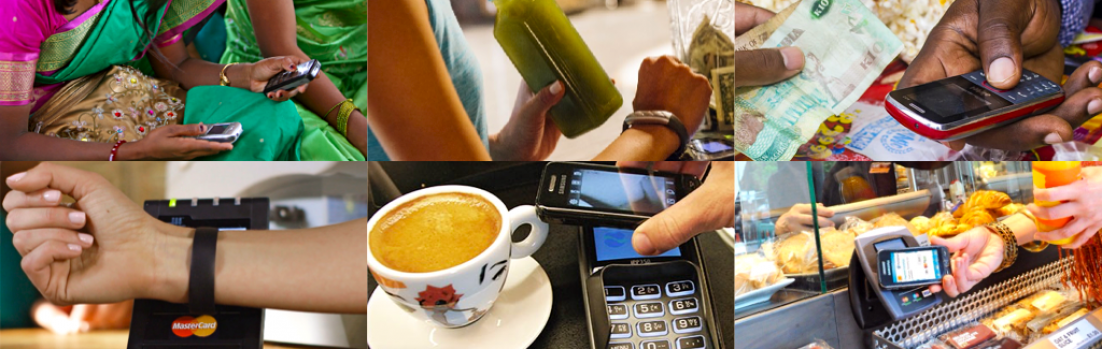
One of the key things here, is the drive  towards NFC mobile phones, as to why the technology is possibly necessary for the ‘Financial Inclusion’ or ‘Transacting at the Point of Sale’. NFC is just the way for two devices to be ‘Connected and Communicate’ using Near Field Communication technology.  I call it a ‘No Fuss Connection’. The connection or pairing between two devices can be done with Blue Tooth, Audio, or a whole number of different mechanisms like QR code, etc. NFC is just a convenience and not mandatory for the enablement of the Retail Point of Sale.

The challenge that is faced by industry, again the RETAIL FRICTION,  is creating major incidences and related issues with Mobile Money transactions and payments that people trying to do while keying on their mobile phones. There are lots of keys on the mobile phones using USSD or SMS type services, etc. They don’t work and the answer to that is why one would not rather use Cash itself. Extrapolating that, why one would not use Cash is probably the reason that there is so much more friction in that process that people are looking for a change. Now, let’s talk about the User Experience, given the type of handset or mobile devices we face in the market…

  • We have basic phones in the target market for financial inclusion,
  • We don’t have NFC at the point of sale, and
  • We can’t introduce a service that requires those things

There are countless number of millions and billions of devices that don’t accept things like NFC and which can’t deal with applications from the banks, etc.  There are new players in the market (aka FinTech), that are bit different form the traditional banking world and moving to new ecosystem. They are Mobile Network Operators, emerging Payment service providers (Apple, Google, PayPal, Alipay, etc.) chasing to get a lion’s share of the Digital Financial Services. There are new regulatory environments that are building up around these changes to actually put in place controls that would enable the services to be used in a wider environment.

There is an expression for MNOs where they already have the geographic and consumer reach:  ‘Think like a Bank, Dance like a Telco’. Their aim being to drive services rapidly like their basic services, yet clearly maintain the control and regulations that surround money today, as much like the banks. The type of services that one needs to build at the Retail Point of Sales, are

  • Standard Services for paying Goods and Services, merchants, government, utility, telco, etc
  • Doing Cash in & Cash Out, and all other types of transactions that would one would expect at POS

It has got to be friction-less, safe, secure, quick and easy, provide an attractive and compelling spend system  that is beyond just Cash in and Cash out, aka CASINO operations. Once this new user experience and interface (UX/UI) is provided to the User at the Retail Point of Sale, then hopefully mobile money and wallet type initiatives can be driven to larger markets, with money that grows in the system for enabling a robust Financial Inclusion and Empowerment.


Leave a comment

Technological Advancements in the Financial Inclusion Sector

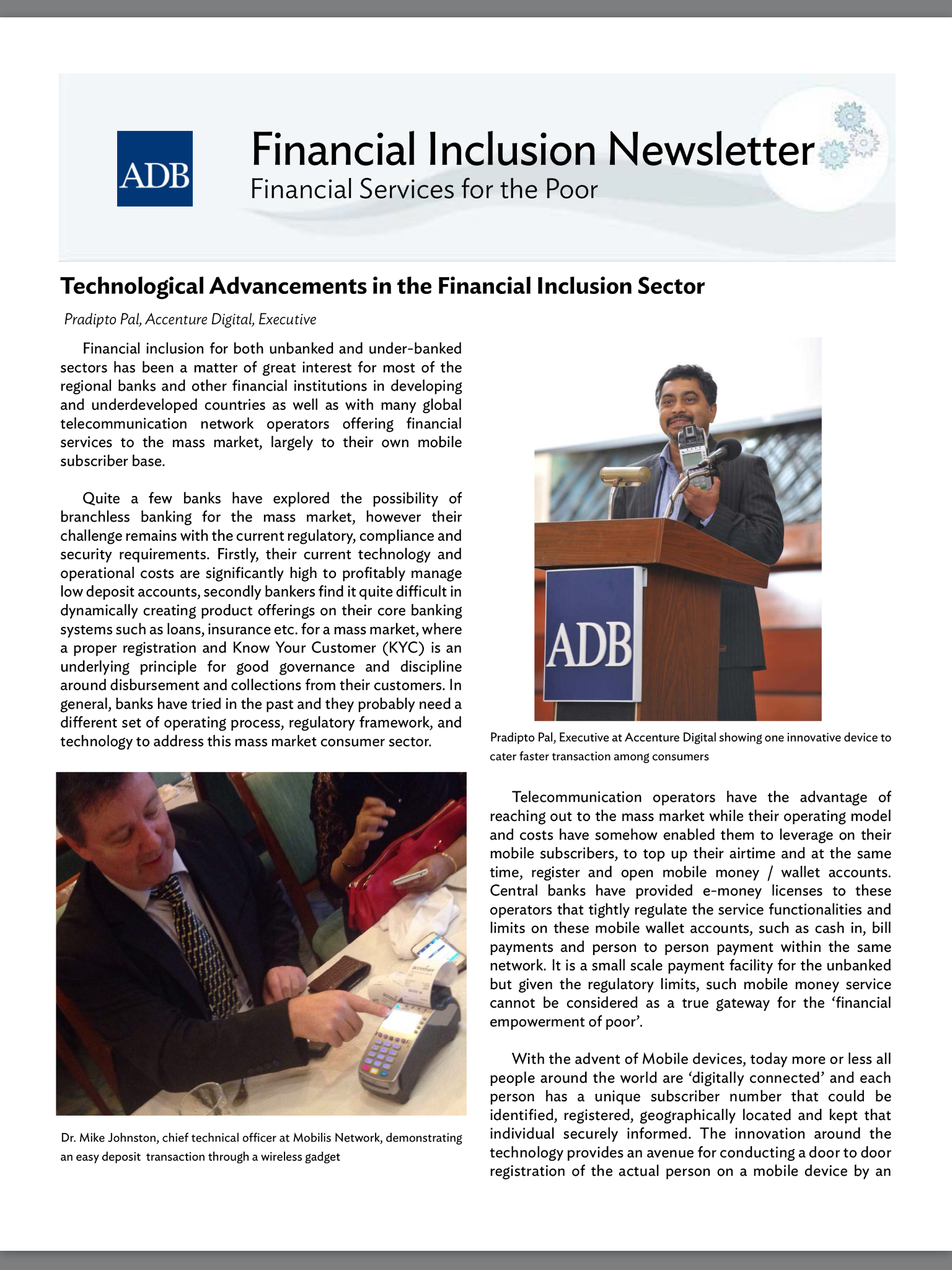
ADB – Financial Inclusion Newsletter – Financial Services for the Poor, Technological Advancements in the Financial Inclusion Sector, by Pradipto Pal, Accenture Digital. (I had written this article on my iPad, while having my breakfast at the Stormsriviermouth, Tsitsikamma, in South Africa – October 2014)

IMG_3205Financial inclusion for both unbanked and under-banked sectors has been a matter of great interest for most of the regional banks and other financial institutions in developing and underdeveloped countries as well as with many global telecommunication network operators offering financial services to the mass market, largely to their own mobile subscriber base. Quite a few banks have explored the possibility of branchless banking for the mass market, however their challenge remains with the current regulatory, compliance and security requirements. Firstly, their current technology and operational costs are significantly high to profitably manage low deposit accounts, secondly bankers find it quite difficult in dynamically creating product offerings on their core banking systems such as loans, insurance etc. for a mass market, where a proper registration and Know Your Customer (KYC) is an underlying principle for good governance and discipline around disbursement and collections from their customers. In general, banks have tried in the past and they probably need a different set of operating process, regulatory framework, and technology to address this mass market consumer sector.

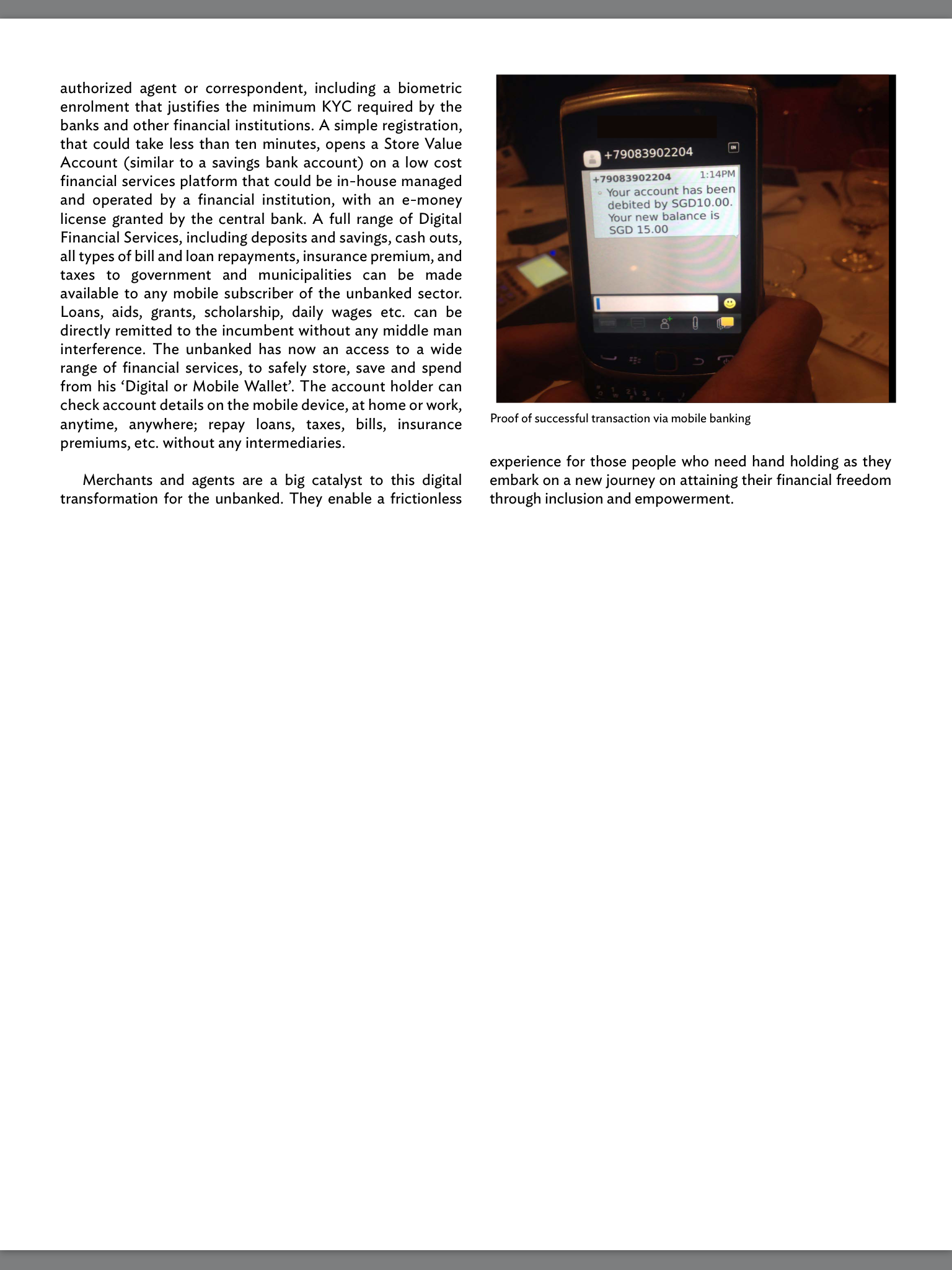
IMG_3204Telecommunication operators have the advantage of reaching out to the mass market while their operating model and costs have somehow enabled them to cater faster transaction among consumers to leverage on their mobile subscribers, to top up their airtime and at the same time, register and open mobile money / wallet accounts. Central banks have provided e-money licenses to these operators that tightly regulate the service functionalities and limits on these mobile wallet accounts, such as cash in, bill payments and person to person payment within the same network. It is a small scale payment facility for the unbanked but given the regulatory limits, such mobile money service cannot be considered as a true gateway for the ‘financial empowerment of poor’. With the advent of Mobile devices, today more or less all people around the world are ‘digitally connected’ and each person has a unique subscriber number that could be identified, registered, geographically located and kept that individual securely informed. The innovation around the technology provides an avenue for conducting a door to door registration of the actual person on a mobile device by an authorized agent or correspondent, including a biometric enrolment that justifies the minimum KYC required by the banks and other financial institutions. A simple registration, that could take less than ten minutes, opens a Store Value Account (similar to a savings bank account) on a low cost financial services platform that could be in-house managed and operated by a financial institution, with an e-money license granted by the central bank. A full range of Digital Financial Services, including deposits and savings, cash outs, all types of bill and loan repayments, insurance premium, and taxes to government and municipalities can be made available to any mobile subscriber of the unbanked sector. Loans, aids, grants, scholarship, daily wages etc. can be directly remitted to the incumbent without any middle man interference. The unbanked has now an access to a wide range of financial services, to safely store, save and spend from his ‘Digital or Mobile Wallet’. The account holder can check account details on the mobile device, at home or work, anytime, anywhere; repay loans, taxes, bills, insurance premiums, etc. without any intermediaries. Merchants and agents are a big catalyst to this digital transformation for the unbanked. They enable a frictionless experience for those people who need hand holding as they embark on a new journey on attaining their financial freedom through inclusion and empowerment. Financial Inclusion- Friction Less Ecosystem


Leave a comment

Building Blocks of Digital Financial Services: Reference Platform Architecture!

Necessary Building Blocks of Digital Banking for Financial Inclusion, Branchless Banking, & Mobile Payments

Over past few years, we invested our time in putting together certain basic features and functions, with notable help from our subject matter architects, Dr. Mike Johnston and Dr. Mohan Rajarathinam, for putting together a low cost, production and commercial grade Mobile Money aka Digital Financial Services platform that is safe, secure and future-scalable.

I hope that this inventory list would be helpful in building future systems that can meet the local transaction types and volume demands and also in parallel support the in-country regulatory compliance and governance. 

– Enable user on-boarding process from handheld portable POS terminal, to cover the rural area in developing countries (for Financial Inclusion use cases)
– Allow additional KYC information capturing such as finger print biometrics for tighter security and seamless transaction
– Increase the usability of Mobile payment transaction, by creating an NFC tag as proxy of Mobile Account

# Register customer through POS
# Fingerprint biometrics
# Low-cost NFC tag (sticker) linking
# One tap NFC payment at supported POS terminalsMain Features:

INVENTORY:

Customer Service
Merchant and Agent Service
User Profile Management
Account Information
Payments and Transactions
Multi-party settlement
Multi-Channel Access and Messaging Framework
Alerting
Back-office Services
Operations Dashboard
Bulk Processing
Reports
Loyalty, Coupons
Security and Audit Frameworks
Integration and APIs
Companion Card (Open loop) IntegrationCustomer Service

Self registration and agent assisted registration
Registration through smart phone, portal, USSD/SMS and POS Terminal
Maker-Checker workflow for registration
Configurable KYC Levels
Upload attachments (scanned IDs, address proofs etc.,)
Customizable customer types
Configurable service packages (Standard, Platinum, Premium etc.,)
Upgrade KYC level
Fingerprint biometrics
Customers can walk into any Agent* store having a POS terminal or web portal access for registration and account opening. All registered Customers are given default Safe-Stored Value Account (SVA) for their cash top-ups, bill payments and also provided with various options to add other payment instruments like their bank accounts and credit cards as their source of funds. Upon successful registration and KYC process, Customers are provided with a NFC tag (sticker) that can be used to make payments/cash withdrawals at all POS terminals available in supported retail outlets. A 16-digit Pre Paid (Companion) Card is issued to each Customer that gets linked to his/her individual Safe-Stored Value Account.
*Agent – Operator’s Business Correspondent

Merchant and Agent Service
Distribution partner, merchant and agent onboarding
Agent hierarchy setup
Stored Value Account(SVA) for merchants for commission settlement
Pre-defined dealer, merchant and merchant agent roles and privileges
Merchant Portal

User Profile Management
Link credit cards, bank accounts
Change PIN and passwords
Change security question and answer
Update address
Update marketing and notification preferences

Account Information
Check SVA and linked account balance
Transaction history and details

Multi-Channel Access and Messaging Framework
Portal, SMS/USSD, POS terminal and smartphone apps
Messaging framework to send emails and SMSs
Supports SMPP 3.4
Customizable Messaging Gateway to add other channels like push notifications

Payments and Transactions
Cash-in/Cash-out
Add/delete payees
Peer-to-Peer transfer
Request money
Air-time Top-up
Bill payments
Domestic remittance
International remittance
Salary/aid disbursement
Merchant payments using linked Companion Card (16-Digit) and NFC tags
Online payments using Companion Card

Multi-party Settlement
Booking, Clearing, Settlement & Reconciliation

Back-office services
Configure VAT/GST
Configure Interest products for SVA
Create and configure fee types and commissions
Define fee rules – Percentage, on-top, min, max and threshold
Configure limits (global, customer type, payment instrument)
Daily, weekly, monthly credit and debit limits
Absolute limits
Limits based on time frame, number of transactions and transaction amount
Customer care
Reset PINs and passwords
Change service package and account types
Blacklist, lock and deactivate customers
Create and assign privileges

Alerting
Account balance summary
Account balance threshold
Invalid account access and password change
Customer lockout
Transaction summary
Configurable alert and notification message templates.
Customers can subscribe to a number of alerts and notifications using the platform’s flexible alerting module. Customers will receive prompt alerts about pending bill payments, account summary, balance information etc. Any suspicious activities on the account will be immediately notified to the Customer. Customers can choose to receive notifications in multiple channels like email, SMS, push notifications etc.

Bulk Processing
Upload bulk registration/deactivation file
Upload transaction/transaction cancellation file
Supports XML, CSV file formats
Powerful bulk processing module that enables Small Medium Enterprises to credit salary to their employees’ account easily.
This feature can also be used by Government funding agencies to disburse aid, scholarship, grants & loans.

Reports
Commission
Daily transactions
Error overview
Fees and commission overview
SVA balance overview and details
Transaction overview and detail

Operations Dashboard
Interactive tracker charts
Sent messages, events count charts
Login count and login duration graphs
Memory usage chart
Servers health check
Requests duration, success and failure counts
Configure settlement and clearing jobs

Security and Audit Frameworks
Authentication and Authorization
Hashed credentials
Encrypted account number and credit card numbers
Security event log
Data read access log
Configuration change log

Loyalty and Coupons
Create and maintain loyalty program
Create and manage loyalty card types
Define earning models
Add/edit tiers, offers and rewards
Create and activate coupons in batch
Assign coupons
Redeem points
Enables DFS Service Operators to reach out to their Customers, understand their requirements and reward them with points for their loyalty. DFS Operators can create loyalty programs, issue loyalty cards, coupons all through a single friendly user interface. Customers get SMS and push notifications about goods and services of their interest, and have coupons pushed right into their smartphone apps. These coupons can be redeemed and help accrue loyalty points and rewards.

Integration and APIs
OpenBank API – Core Banking Integration
Secure API Gateway

Companion/ Pre Paid Card (Open loop) Integration
Issue and link Companion cards
Activate and deactivate cards
Merchant payments at all supported retail outlets
Withdraw money from supported ATMs
With the powerful open-loop integration Customers are able to make payments anywhere in the world across all retail outlets that supports 16 Digit Cards (Visa/MasterCard) and withdraw money from ATMs worldwide!!Enhance the payment ecosystem coverage by increasing the merchants baseline without directly acquiring them (i.e. Transaction can be made in any merchant accepting 16 Digit Card)
– Increase the usability during payment transaction, by using plastic card as proxy to Mobile Account
– Avoid the needs for Merchant to train the cashier to use new user interface / tool to conduct the payment transaction
– Leverage existing infrastructure (such as ATM machines) to conduct transaction such as Cash In or Cash Out
– Leverage Primary Account Number (aka. 16 digit number) to conduct E-Commerce online shopping transaction or international money remittance


Leave a comment

Building Trust as Foundation for Inclusion: Financial Literacy Programs (Part 2)

– continued from Part 1 –

Financial Inclusion of Poor Source: The World Bank

Financial literacy means different things to different people. Financial literacy is a prerequisite for maximizing welfare, both individually and for society generally. In the developing world, the correlation between income and access to financial services remains very strong. But it is also a “chicken and egg” question. Does higher income bring better access? Or does increased access lead to higher incomes?  Thus intervening on the side of greater access (given the access to Digital channels / mobile devices) help provide impetus for job creation and more income opportunities.

But, importantly, we have found that greater access alone can easily lead to a personal financial crisis if people do not clearly understand how the system works—and what new products really offer. Everyone given the opportunity to avail of these services needs to be financially literate. And this is true whether one is poor, lower or middle-income, or high net worth individuals. For the poor, the vulnerability is particularly acute. Cash management at the best of times is difficult. Even without access to the system, financial literacy encompasses knowing how to manage income volatility and facing unexpected emergencies without falling into a debt trap—often from unscrupulous usury informal finance.

So, carefully explaining the benefits of joining the formal financial system is a critical—if difficult—first step. As one rises the income ladder, literacy means understanding increasingly complex financial products, what they can offer, and the potential risks and pitfalls. It affects individuals and households. But it also has an impact on overall financial and economic stability. At all levels, understanding even rudimentary finance is essential for daily life. Unfortunately, most do not.

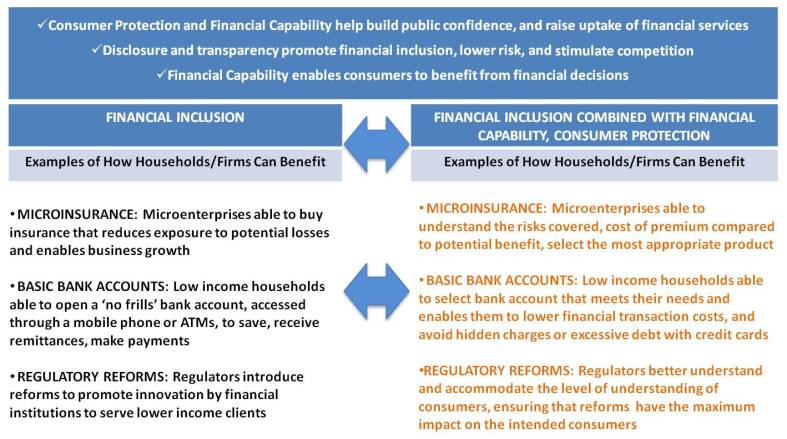
Technological advances have led to greater efficiency and made products more user-friendly. Use of mobile phones and ATM systems for receiving income and paying bills is making rural areas far less remote. Cash transfer systems increasingly employ them. Computer and internet banking are becoming ever more common. On the downside—so are threats from unscrupulous agents. Information asymmetries and irrational emotions lead to bad financial decisions. That is why it is so crucial people know what new gadgets can and cannot do. It is why awareness of phishing, or other scams is important. And critically, it is why regulators must ensure financial education accompanies financial access and inclusion. Financially literate consumers can assess risks and make informed decisions about the suitability of financial products to their specific situation. Thus, information disclosure must go hand-in-hand with boosting financial literacy to ensure a level playing field.

As governments face debt and cost limitations, individual responsibility for financial planning takes on greater importance. And it is happening precisely when individuals are seeking better job security—in an environment where financial institutions are wary of providing excessive credit. Unexpected shocks can be devastating. And this is where, for example,micro-insurance holds so much potential. Financial literacy programs must incorporate better risk management of credit,savings, and insurance. They need to balance basic math—like calculating interest and real returns, for example— with basic financial concepts and how financial entities like pensions, mutual funds, and insurance works. Most importantly, financial literacy programs need to ensure participants know how to find out more when they need to. Financial education must start early and continue through adulthood.

Greater financial access combined with financial education creates financially responsible citizens. This mix of financial access and financial education provides a foundation for appropriate market conduct and prudential regulation. A standardized financial education curriculum could be developed in line with the interests and needs of children, teenagers, and young adults (poor people). But teachers need to be financially literate first. Improving individuals’ financial behavior has become a long-term policy priority in many countries. And it has notably led to the development of a wide range of financial education initiatives by governments, regulators and various other private and civil stakeholders, often combined with financial consumer protection measures.

That is why financial literacy and financial inclusion have become such prominent global issues. Following the global financial crisis, inclusion moved quickly onto the G20 agenda.

The September 2009 Leaders’ Summit in Pittsburgh pledged “to support the safe and sound spread of new modes of financial service delivery capable of reaching the poor.” It also called on financial standard setters to “promote successful regulatory and policy approaches and elaborate standards on financial access.” This was designed to make international financial standards relevant to emerging markets, particularly in building the regulatory environment for products such as micro-insurance, and to involve the private sector in the process.

  • By the 2010 Summit in Seoul, the G20 had developed a “Financial Inclusion Action Plan” and committed to launch the Global Partnership for Financial Inclusion, or GPFI.
  • At the June 2012 G20 Summit in Los Cabos, Leaders endorsed a set of “High Level Principles on National Strategies for Financial Education”—produced by the OECD/ International Network on Financial Education.
  • And in March 2014, the new GPFI Sub-group on Financial Literacy and Financial Consumer Protection was created. This has provided global momentum.

Although ASEAN governments have progressively promoted financial literacy, many challenges remain. These include

  1. Large rural or remote areas with difficult physical access,
  2. The need for better supervisory capacity among financial regulators,
  3. Legal frameworks for financial consumer protection and financial literacy, and
  4. Addressing the pervasive “informal” markets that handle lending, insurance, and remittances for those unable to tap into the formal system.

As the arteries of finance spread, we will see more mobile and branchless banking; electronic retail payment systems; streamlined remittance structures; deeper financial infrastructure in creating financial identities, data flows, and building legal frameworks for secured lending.

However, for these to work in expanding access and promoting job creation, financial literacy and consumer protection are fundamental prerequisites. Together they must be able to instill trust in financial products and the financial institutions that offer them. Trust is the foundation underlying financial products and services.

They cannot work otherwise.  So how can we ensure this will happen?


Leave a comment

The three “I’s” – Innovation, Inclusion, and Integration are central to Financial Literacy Programs (Part 1)

Some of the relevant insights as shared by Mr. Stephen Groff, ADB VP at the ASEAN Financial Literacy Conference, held in Brunei Island, during late 2013.

Development stems from innovations and new technologies that significantly reduce costs and increase efficiency in offering financial services to the poor, the traditionally unbanked, and to micro, small, and medium-sized businesses. For small and medium-sized enterprises—which are truly the future backbone for ASEAN development and growth (and rebalancing toward domestic demand)—financial literacy can activate financial opportunities for investment. The development of mobile and branchless banking, improvements in credit information systems, risk analytics, and electronic data security have allowed these groups greater access to finance. Much of its success, however, pivots on the quest for financial literacy.

Innovation is in Asia’s blood—even paper money was invented in Asia. Innovation is at the forefront of the drive toward financial literacy. Services must be offered outside traditional channels to reach a wider customer base. And, in many cases, it is non-bank innovation that has led the way in bringing the message across to traditional financial vendors.

Over the past decade, from internet commerce to remittance transfers, financial institutions have played catch-up in accommodating ways of servicing the unbanked. Policy makers face the challenge of how to regulate and guide this evolution. As we know, those who want to subvert the system through greed are usually first-line innovators. So regulators must be savvy enough to stay one step ahead.

Here’s an example of two mobile phone financial services introduced in the Philippines—the bank-based so-called Smart Money, and the non-bank based G-Cash system. The two services received initial authorization to launch from the Central Bank even though there was little regulation in place. Instead, the Bangko Sentral chose to allow a carefully controlled pilot phase to test different business models, and used the results to innovate relevant and effective e-money regulations. These now address the risks arising from new mobile channels and allow a variety of models to flourish, while maintaining the safety and soundness of the system. It has not been all smooth sailing. The Central Bank maintains an open dialogue with industry and civil society to foster an environment conducive to innovation.

Part of that is creating the right risk protection instruments for those new to financial access. Unaffordable and inadequate insurance products, informal insurance schemes, and low appreciation of micro-insurance are some of those hurdles ASEAN countries face.

The Philippine Government, together with the ADB-administered Japan Fund for Poverty Reduction and German International Cooperation, for example, have been working to enhance financial literacy on micro-insurance, especially for the poor.

Inclusion has grown to become the development sound bite of this era. Its formal definition is having “universal access, at reasonable cost, to a wide range of financial services, provided by a diversity of sound and sustainable institutions.” The nine G20 Principles for Innovative Financial Inclusion together form a set of conditions conducive to drawing in those currently isolated from financial systems, while safeguarding financial stability and  protecting consumers.

Estimates vary by country, but it appears some 70%–80% of adults in the region remain outside the formal financial system. Encouraging banks to service rural and far-flung regions, continuing efforts to promote and expand micro-finance, building outreach programs, working through local governments and community organizations are all ways to communicate the value-added of financial inclusion. And with available technology, it can be demonstrated on the spot.

But it must be promoted along with an equitable and transparent consumer protection infrastructure—a vital part of any broad financial inclusion framework. For governments, this means that promoting financial literacy is an integral part of inclusion. Best practice indicates that effective initiatives focus on providing practical, easy-to-understand and impartial advice so that consumers can make informed choices. From the regulatory side, “proportionate regulation” is becoming popular—whereby market development is encouraged by tailoring the regulatory burden to the risk characteristics of business, and creates incentives for future financial inclusion.

As innovation allows for more inclusion and better integration, clearly our experience in acknowledging financial literacy as a fundamental prerequisite for successful micro-finance or micro-insurance projects means our own approach is constantly evolving.

“Deliver comprehensive support through financial inclusion, literacy, and education”.

Consumer protection is essential if we are to build trust in the systems we help build. And that is why financial literacy is so important. Financial literacy and financial inclusion comes in stages, starting with initial contact, the introduction of mobile transfer and payment schemes, then savings and borrowing, followed by more complex aspects such as investing or insurance. The region’s poor need more than loans— there needs to be the financial literacy for people to choose wisely. As It revolves around trust—whether in the regulatory structure or the system itself. Innovation, inclusion, and integration flow through ASEAN’s arteries.

All three “I’s” are central to building financial literacy across the region, particularly for those still relying on informal finance.


Leave a comment

Financial Literacy Programs and Self Awareness. Period!

Philippines Overseas Foreign Workers (OFWs) remit more than 20 Billion US dollars every year to their country. At our own home, Remedios has been taking care of our household for past five years and sending her monthly salary to support  her three school going children, ailing seventy-five year old mother, and an unemployed brother who hasn’t got a job in last two years although he has earned a Diploma in computer maintenance. Remy has eventually learnt to save for herself by remitting a part of her money to her own home-country savings account and the remaining balance to her mother.

In general, OFWs find it difficult to overcome their past financial difficulties, as they keep remitting money to their family members or next-of-kin and finally not saving enough money for themselves. They are a bunch of extremely kind and humble people and would not refuse anyone when asked for help or a money loan. As a result, they continue to stay as poor and return home with little savings and hope for the future. This situation can only change when their employer coaches them to remit money to their own savings account that could probably help them one day to start a small business of their own, as and when they eventually decide to return home. Last year from Accenture, my team and I went on a study mission in the Philippines and we discovered few startling facts that I would like to share here.

About 70% of the total remittance (US$ 20 Billion) happens through banks in overseas and 22% of the remittance happens through other channels. About 57% of the OFWs don’t have savings from the Cash remittance sent. Less than 25% of the total amount remitted is being saved by majority of the population.

There is near-absence of any major and mature downstream ecosystem for cash flow (digital financial service) after a Cash-out is made by the beneficiary from local remittance agent. Existing remittance systems, benefits the remittance beneficiaries and not the senders, the OFWs in this case. I would share in one my next posts, amazing works of Dr. Jaime Aristotle B. Alip, MD of CARD MRI. I had met him last year, when card MRI already had more than 2.5 million poor families with a total outstanding loan of more than Peso 9 Billion. Total asset of CARD MRI is more than Peso 17 Billion, and they have more than 7000 dedicated staff workers, while under CARD micro-insurance they have included and insured more than 9.7 Million citizens.

The Philippines is ranked as the third biggest recipient of remittances, and yet more than half of the families are dependent on remittances as source of their daily sustenance and they do not apportion any significant amount towards their personal or family savings. Poor personal financial management has been a key problem of Filipino OFWs and their families at home, well over decades now, and the interventions introduced by the government have still been less than adequate, despite many programs that are currently running. In fact, four of five Filipinos still do not have a savings account. Mobile Money ecosystem is available only for those who have SMART or GLOBE mobile number. Mobile wallet access is not available for OFWs who have an International MSISDN. OFW can remit money to the families through GCash and SMART Money. Unfortunately, in most of the cases. the OFW doesn’t have any control over the money once sent to the Philippines.

Financial Literacy Programs, Raising Self Awareness. Period!

Check your device loudspeaker, and watch this Video..

Notable mention and admiration is due to USAID’s Scaling Innovation through Mobile Money (SIMM) Project that is aligned with the Philippine Government’s thrust of promoting financial inclusion by expanding citizen’s access to formal banking and financial services and improving accountability and security in government transactions through digitisation of payment and collection systems. http://www.usaid.gov/philippines/press-releases/us-government-and-quezon-city-launch-mobile-money-system