

– continued from Part 1 –
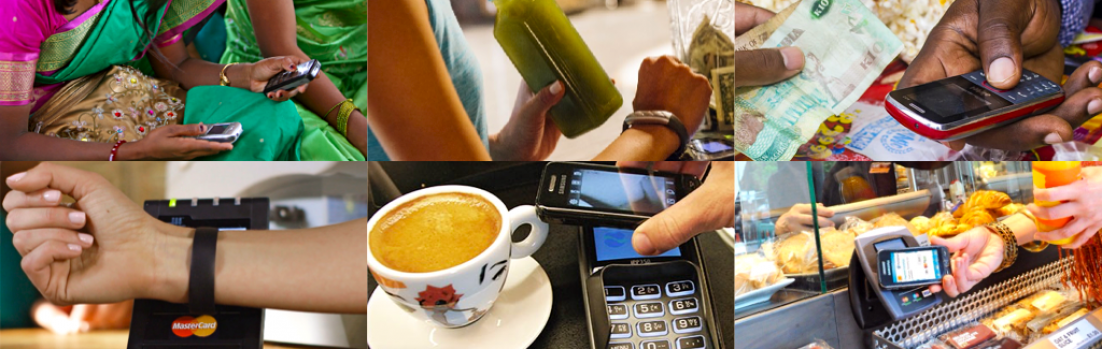
Financial Inclusion of Poor Source: The World Bank
Financial literacy means different things to different people. Financial literacy is a prerequisite for maximizing welfare, both individually and for society generally. In the developing world, the correlation between income and access to financial services remains very strong. But it is also a “chicken and egg” question. Does higher income bring better access? Or does increased access lead to higher incomes? Thus intervening on the side of greater access (given the access to Digital channels / mobile devices) help provide impetus for job creation and more income opportunities.
But, importantly, we have found that greater access alone can easily lead to a personal financial crisis if people do not clearly understand how the system works—and what new products really offer. Everyone given the opportunity to avail of these services needs to be financially literate. And this is true whether one is poor, lower or middle-income, or high net worth individuals. For the poor, the vulnerability is particularly acute. Cash management at the best of times is difficult. Even without access to the system, financial literacy encompasses knowing how to manage income volatility and facing unexpected emergencies without falling into a debt trap—often from unscrupulous usury informal finance.
So, carefully explaining the benefits of joining the formal financial system is a critical—if difficult—first step. As one rises the income ladder, literacy means understanding increasingly complex financial products, what they can offer, and the potential risks and pitfalls. It affects individuals and households. But it also has an impact on overall financial and economic stability. At all levels, understanding even rudimentary finance is essential for daily life. Unfortunately, most do not.
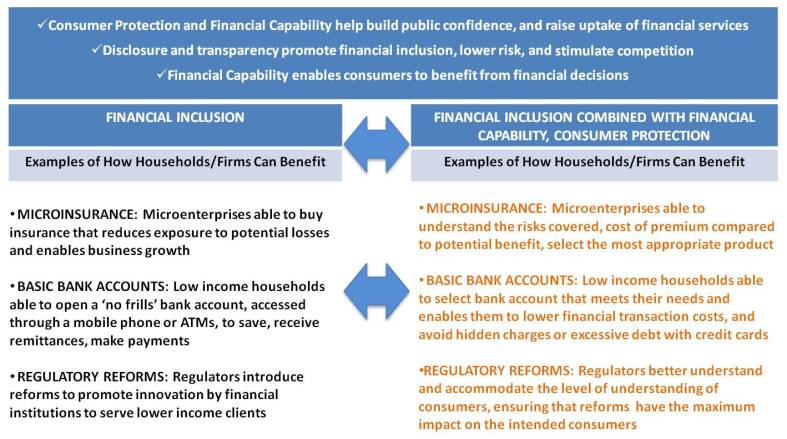
Technological advances have led to greater efficiency and made products more user-friendly. Use of mobile phones and ATM systems for receiving income and paying bills is making rural areas far less remote. Cash transfer systems increasingly employ them. Computer and internet banking are becoming ever more common. On the downside—so are threats from unscrupulous agents. Information asymmetries and irrational emotions lead to bad financial decisions. That is why it is so crucial people know what new gadgets can and cannot do. It is why awareness of phishing, or other scams is important. And critically, it is why regulators must ensure financial education accompanies financial access and inclusion. Financially literate consumers can assess risks and make informed decisions about the suitability of financial products to their specific situation. Thus, information disclosure must go hand-in-hand with boosting financial literacy to ensure a level playing field.
As governments face debt and cost limitations, individual responsibility for financial planning takes on greater importance. And it is happening precisely when individuals are seeking better job security—in an environment where financial institutions are wary of providing excessive credit. Unexpected shocks can be devastating. And this is where, for example,micro-insurance holds so much potential. Financial literacy programs must incorporate better risk management of credit,savings, and insurance. They need to balance basic math—like calculating interest and real returns, for example— with basic financial concepts and how financial entities like pensions, mutual funds, and insurance works. Most importantly, financial literacy programs need to ensure participants know how to find out more when they need to. Financial education must start early and continue through adulthood.
Greater financial access combined with financial education creates financially responsible citizens. This mix of financial access and financial education provides a foundation for appropriate market conduct and prudential regulation. A standardized financial education curriculum could be developed in line with the interests and needs of children, teenagers, and young adults (poor people). But teachers need to be financially literate first. Improving individuals’ financial behavior has become a long-term policy priority in many countries. And it has notably led to the development of a wide range of financial education initiatives by governments, regulators and various other private and civil stakeholders, often combined with financial consumer protection measures.
That is why financial literacy and financial inclusion have become such prominent global issues. Following the global financial crisis, inclusion moved quickly onto the G20 agenda.
The September 2009 Leaders’ Summit in Pittsburgh pledged “to support the safe and sound spread of new modes of financial service delivery capable of reaching the poor.” It also called on financial standard setters to “promote successful regulatory and policy approaches and elaborate standards on financial access.” This was designed to make international financial standards relevant to emerging markets, particularly in building the regulatory environment for products such as micro-insurance, and to involve the private sector in the process.
- By the 2010 Summit in Seoul, the G20 had developed a “Financial Inclusion Action Plan” and committed to launch the Global Partnership for Financial Inclusion, or GPFI.
- At the June 2012 G20 Summit in Los Cabos, Leaders endorsed a set of “High Level Principles on National Strategies for Financial Education”—produced by the OECD/ International Network on Financial Education.
- And in March 2014, the new GPFI Sub-group on Financial Literacy and Financial Consumer Protection was created. This has provided global momentum.
Although ASEAN governments have progressively promoted financial literacy, many challenges remain. These include
- Large rural or remote areas with difficult physical access,
- The need for better supervisory capacity among financial regulators,
- Legal frameworks for financial consumer protection and financial literacy, and
- Addressing the pervasive “informal” markets that handle lending, insurance, and remittances for those unable to tap into the formal system.
As the arteries of finance spread, we will see more mobile and branchless banking; electronic retail payment systems; streamlined remittance structures; deeper financial infrastructure in creating financial identities, data flows, and building legal frameworks for secured lending.
However, for these to work in expanding access and promoting job creation, financial literacy and consumer protection are fundamental prerequisites. Together they must be able to instill trust in financial products and the financial institutions that offer them. Trust is the foundation underlying financial products and services.
They cannot work otherwise. So how can we ensure this will happen?


 GOOFTAGU