
 It actually started to bite me in early 2007, when the thought of exploring the unknown… outside traditional technology and working for a while beyond the cubicles of corporate, came to my mind. Since last year, my friends have been nudging me to share my exotic experiences, as quite a few of them had made subtle indications, of-course post few rounds of beer, to retire for the better good of the investors. Often after midnight, I would say early mornings, I landed up paying for the endless beer and wine bottles. I have now become wiser, and it makes a good reason to share all those stories publicly, as my wallet feels safer and my friends can sit at their own cosy home, get their own beer cans and wine bottles and read Gooftagu on their tablets. I would talk another time about why I created Gooftagu..
During my school days, I went to spend my summer holidays, with my parents at a hill station in central India, where my dad was a medical doctor at the only general hospital in a district inhabited by three million people. He had three hundred beds and three other doctors supporting him to take care of the local inhabitants. Everyday morning, I saw the locals riding their bicycles coming down from their villages for selling their farm grown vegetables, eggs, milk, fish, including live chicken, rabbits, parrots, and lots of their own cottage stuff. They would mostly pay for their medical expenses with cash they got from selling their goods, and there were few who would try to exchange or barter their eggplants or other items for medicines and their treatments. Dad wasn’t happy about that, and he would take that personally and quietly pay on their behalf from my mom’s household expenses, and mom wasn’t happy either.
For these village folks, the most precious thing was their bicycle that they would not exchange for any reasons. Their lives would end in the absence of that human powered, pedal driven, single track vehicle. Before sunset, they would always cycle back to their villages with their cash and medicines. After so many years, probably their lives have changed, all of them now having mobile phones and are a part of the better world. Hopefully, their children and grandchildren have got education and now having secured meaningful earnings from their work areas. Given a choice today, between a bicycle or a smartphone, they would first pick a smartphone and probably claim both on a second chance. One thing, I am still unaware, whether they have any bank accounts today, since in those days it was only meant for the educated lot.
I opened my bank account at the official age of eighteen, and when I went to college. I queued up at the bank’s branch office during lunch hours to withdraw cash and have my bank’s pass book updated. Thirty-two years later, and it wasn’t until mid 2008, when I decided to dabble with two factor authentication. I was suspected as partially deaf on my left ear caused by a mobile phone that had a tendency to get hotter as it came closer to my left ear, as I was desperately trying to get an access to my bank’s call centre officer. I needed to know about my bank balance, and secondly if it has hit the pit-hole, as I was already hardened on this issue during my college days, courtesy my many areas of interest, beyond the usual academic and lab work.
While still clinging on to my mobile phone, it took me nearly 15- 20 minutes each time to get my account balance update, after enduring four-five sets of personal verification questions. Often the question could lead to ‘what is my last transaction’ or ‘my current balance’. The last one was the most frustrating, and I would generally hang up and read my star signs and find the next best day to call the bank. I would admit, that the call centre officer would coach me on how to set up a phone banking PIN, or Telephone PIN for a quicker service if I made a similar attempt next time. I would instantly forget it the next day, as I would not remember where I had actually stored that six digit code.
It took me three years to reach to a point, with more than half a dozen University guys in Singapore, having completed with their Masters and Doctorate, to bring them together in an independent start-up operation and build a bio-metric application using Voice for authentication. It wasn’t speech recognition, though we used some of the techniques in the overall process. Voice bio-metric authentication could be compared and could be as good, if not absolutely better when compared with thumb, face, or eye results. It is definitely unique and non-intrusive, can be used remotely relying on an inexpensive method, and all it needed was a phone that belonged to the identifier, and above all it is language and accent independent. I would write a separate note about all those great individuals who helped me through this journey to learn and discover, supported me either financially or spiritually in connecting the dots and helped us in more than many ways to explore the unknown. They are outstanding scholars and samaritans who stood by us for a good cause and reason. They remain as my life long friends and associate partners.
By late 2000, I was realising the insurgence of mobile phones in every house-hold and possible usage and application of Voice bio-metrics for people who were uneducated, underprivileged or deprived, and probably too poor to afford a telephone. It could happen in future, that such people could probably use their ‘voice’ to remotely access social services or provide authentication to receive their basic needs and any form of financial support. As their literacy level was not adequate, Voice biometrics could be an easier tool and inexpensive platform, that could assist NGOs to send their agents to deliver the goods and services to the ‘identified’ incumbent. As a second option, these people could jump on their bicycle to a nearby government authorised outlet for collection of goods and rations against a token number that they would have received via a SMS on Voice Authentication.
Welcome to the new age of digital barter system… now having coined this idea with my few friends.
We were sure about the extent of mobile phones penetration and I was personally wondering if someday, smartphones would be cheaper than a bicycle, it would potentially fuel the usage of mobile phones for conducting activities from home, other than making just voice calls. It would be a real Value Engineering.
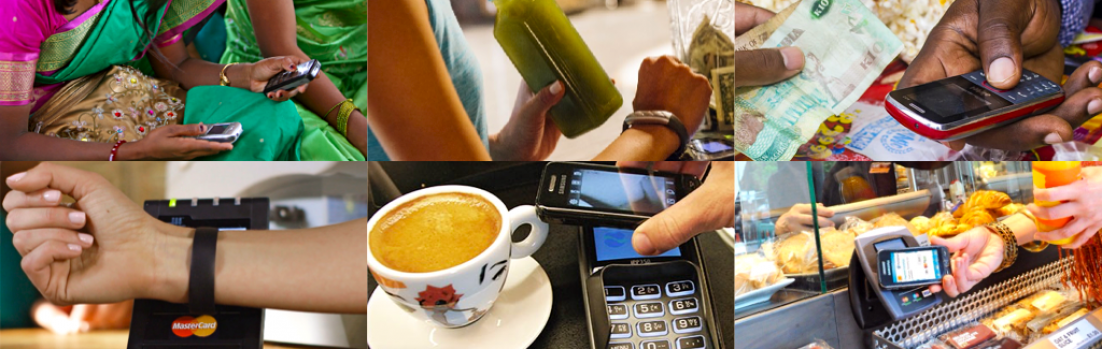
If one could do a proximity purchase with a merchant of airtime card reseller at a local store, the same person could also buy or download some virtual cash, a digitised version, either by paying at the store, or in the same way the person would remotely buy a popular Bollywood song or video in either mp3 or mpeg format. If the Telco operator could do on a real time basis, airtime top up and charging, or deliver any other mp3/mpeg content, they could be in a position to allow subscribers to download, top up, transfer or exchange digital cash to and from the subscriber’s pre or post paid account,for a small flat fee.
It’s about three things; media, money and messaging that consumes the data pipe that a subscriber is willing to pay for downloading and sharing, in addition to the subscriber connection fee to the Telco operator. If the subscriber wants to inquire on the account balance, or make a payment to another person, all such ‘exchanges’ would occur on the operator’s network and it would be a simply be a matter of debit or credit between two subscriber accounts. Now, what could be better than the Voice bio-metric authentication to conduct such fund transfers and exchanges of digital content between the payer/subscriber and the payee/recipient – a next door grocery, village clinic or school, or paying their electricity bill, taxes or instead receiving some cash subsidy from government aid for medical and children’s education without cycling to the Centre and standing in the queue for mindless hours and filing up numerous forms.
What about the Telco’s? As one would expect, Telco’s would find new ways of making revenues, to provide what they call as value added services (VAS) to their subscribers. Probably, they would need a money licence from their country’s central bank, to collect and handle public funds, and they may be required to hedge that risk by reserving and keeping a certain amount of deposit with the local authorities against their money license. Telco could smartly partner with a bank, and safely store the consumer’s money with the bank, and that float amount would sit with the partner bank under the Telco operator’s account. The partner bank now has a broader reach and access through the Telco operator to the Telco’s subscribers, would be now acting as a partner to distribute and market bank’s financial products. Telco, the new Fintech of Digital Financial Services is now the sponsor and catalyst of the Financial Inclusion of the Unbanked.
The proposal could bring new dimension to Development Financing through micro-finance or micro-loan for improving subscribers’ quality of lives, and even helping them to buying a bike, a tractor or farming equipments with customised agro-loan. Telco owns and retains the most valuable information, the subscriber and customer data and knowledge. They would mine, and further harvest and disseminate the wisdom to the banks, other financial institutions and their own subscribers for improving their quality of life.
It would be really wonderful if the bicycle is not anymore the single point of failure, plus if the weather has been inclement and going out cycling is not one of the wisest thing to do when one has an ailing child or mother at home. I see data explosion, with lots of potential to capture that big data at an early stage for analysing and learning the nature of shifting demographics due to digital revolution. I will probably write on this, another day.
For now, I want to visit our early days and share on my next post, few videos on the Voice Biometric application on mobile devices that we built few years back…..and yes, there are customers in Asia who are proudly using our innovation.

 GOOFTAGU